
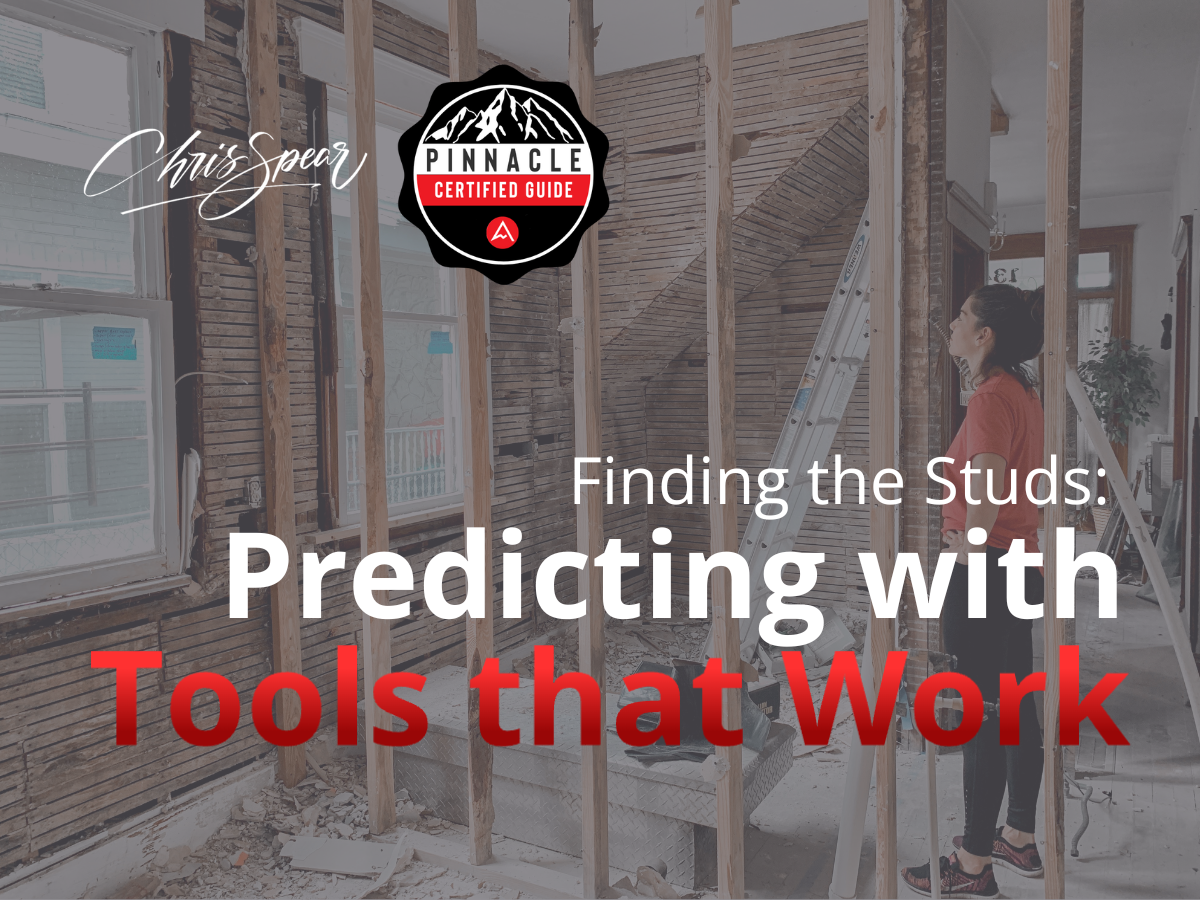
Over the weekend, I tackled a project at home that turned into an unexpected leadership lesson. I hung five large bookcases in my home office—not decorative shelves, but heavy-duty bookcases meant to hold real weight. That meant one thing: drywall alone wouldn’t cut it. I needed to hit the studs.
The problem was obvious. I couldn’t see them.
So I reached for a stud finder—a simple tool designed to detect what’s solid behind the wall. I trusted the tool. It beeped. I drilled. And one by one, those bookcases went up securely because I believed what the tool was telling me.
Leadership works the same way.
Much of what matters most in leadership is hidden. We make decisions without full visibility. We commit resources, people, and time based on what we believe will hold. Strong leaders don’t guess blindly—they predict using proven tools.
In Pinnacle, Predict is a core leadership discipline. It’s about seeing patterns early, anticipating outcomes, and acting with confidence before problems become expensive.
Predicting with Quarterly Priorities (FAST Rocks)
Quarterly priorities aren’t just a list of important things to work on. They are a prediction tool.
When leaders establish FAST Rocks the right way, they don’t rely on instinct alone. They follow a disciplined process that reveals where focus will matter most over the next 90 days.
Strong Pinnacle leaders:
- Re-anchor on the long-term direction and the Pinnacle (#1 Goal)
- Reflect honestly on what did—and didn’t—move the business forward last quarter
- Review open Issues and Brutal Facts that are limiting progress
- Identify where focused effort will create the greatest leverage next
That process exposes where the next anchor point belongs. Instead of guessing where to drill, leaders use the process to identify where effort will actually hold weight.
Seeing Trends Before Problems Show Up
Weekly metrics provide another powerful way to predict.
When leaders track a small set of meaningful numbers consistently, patterns emerge. Trends become visible. Small deviations show up early—while there’s still time to adjust.
You may not be able to see the issue yet, but the data is already telling a story.
Just like lining up a screw where the stud finder beeped, metrics give leaders the confidence to move forward. You won’t know for sure until you act—but you’re far more likely to hit something solid when the numbers are guiding you.
Predicting Through Issues and Brutal Facts
Strong Predict leaders don’t wait for problems to become unavoidable.
They maintain visible Issues Lists and create space to surface Brutal Facts early—before emotion, pressure, or avoidance distort reality. This allows leadership teams to solve problems while they are still manageable.
Ignoring issues is like drilling holes randomly across the wall, hoping one lands on a stud. The mess is almost always bigger than the original problem.
Prediction improves when leaders confront reality sooner.
Predicting Hiring Success—Before the Damage Is Done
Few decisions carry more weight than hiring.
Strong leaders don’t rely on gut feel alone. They assess whether someone aligns with the organization’s values and whether they can truly carry the load of the role—now and as the business grows.
A candidate can look great on paper and still fail under pressure. Culture misalignment cracks faster than drywall. And when that happens, the damage spreads—through morale, performance, and trust.
Predicting fit before hiring saves far more time and energy than fixing the holes afterward.
Predictability Through Clear Ownership and Shared Playbooks
When accountability is unclear, outcomes become unpredictable.
Clear Results Ownership ensures leaders know who owns what, who decides, and who is accountable for follow-through. Paired with documented playbooks, this creates consistency across the organization.
When everyone executes differently, leaders are forced to manage exceptions. When work follows shared playbooks, leaders can predict results.
Quality improves. Clients experience reliability. Profitability stabilizes.
Strong processes don’t limit flexibility—they eliminate chaos.
Predicting Alignment Through Meeting Rhythms
Prediction improves when leadership teams meet with discipline.
Consistent meeting rhythms create space to review metrics, track priorities, surface issues, and make decisions while there are still options. Without rhythm, leaders react late. With rhythm, they anticipate early.
Predict leaders don’t wait for surprises—they see them coming.
The Tools Don’t Remove Risk—They Reduce Regret
When I hung those bookcases, I didn’t drill blindly. I trusted a tool designed to help me predict what I couldn’t see—and it worked.
Leadership tools serve the same purpose.
They don’t eliminate uncertainty, but they dramatically reduce unnecessary mistakes. They help leaders act earlier, decide with clarity, and build something solid instead of hoping for the best.
When leaders use the right Pinnacle tools—priorities, metrics, Issues, people assessments, ownership, playbooks, and meeting rhythms—they stop reacting and start leading with intention.
They make fewer mistakes.
They cause less damage.
And they build organizations that can carry weight.
What’s Next
If you want to predict better outcomes, start using tools that actually work. The answers are already there—in the tools.