
Does Fitness Help You Lead?
Pause for a moment and reflect on your leadership energy.
- When you’re working on the business and in the business, would it help to naturally exude more energy and enthusiasm?
- Would you like your physical presence to reflect the vision and aspiration you hold for your company?
- Do you experience fatigue or brain fog during the day?
- Have you ever caught yourself fighting sleep on a call or in a meeting?
- Do you find yourself reaching for caffeine or snacks just to get through the afternoon?
If you answered yes to any of these questions, there is an opportunity worth paying attention to.
Leadership is not just cognitive or strategic. It is physical. Your body is the vehicle through which clarity, confidence, communication, and conviction are delivered.
Leadership Energy Is a Capacity Issue
In Pinnacle, we talk often about capacity—not just organizational capacity, but personal capacity. Leaders can only sustain clarity, judgment, and influence when their energy supports the demands of the role.
This isn’t about chasing perfection or rigid fitness protocols. Volumes have been written on health, nutrition, and training. Instead, what follows are simple principles that have made a meaningful difference for me—and for leaders I work with.
With a modest amount of attention, it is possible to reverse cravings, fatigue, and mental fog—and show up with greater presence and impact.
Turning Around Cravings: Fuel for Stability
What and how you eat directly affects your leadership consistency.
I’ve found that prioritizing protein and healthy fats early in the day sets the tone for sustained energy. A substantial, stabilizing first meal helps regulate blood sugar and reduces mid-day crashes.
By contrast, high-sugar or refined-carbohydrate breakfasts tend to send energy on a roller coaster—followed by cravings, irritability, and distraction.
A few guiding principles:
- Prioritize foods that support muscle and cellular health
- Limit refined carbohydrates; favor whole foods with fiber
- Stay hydrated—thirst is often mistaken for hunger
Stable energy supports stable leadership.
Turning Around Fatigue: Respecting Recovery
Fatigue is often a signal—not a flaw.
In my own experience, excessive reliance on caffeine masks the problem rather than solving it. Late-day caffeine, in particular, disrupts sleep quality, which compounds fatigue over time.
Simple habits matter:
- Allow your body to wind down naturally in the evening
- Use movement—like an after-dinner walk—to support digestion and sleep rhythms
- Protect recovery as seriously as productivity
Leaders who ignore recovery eventually pay for it in focus, patience, and decision quality.
Amplifying Energy: Train for the Role You Perform
Leadership is a performance.
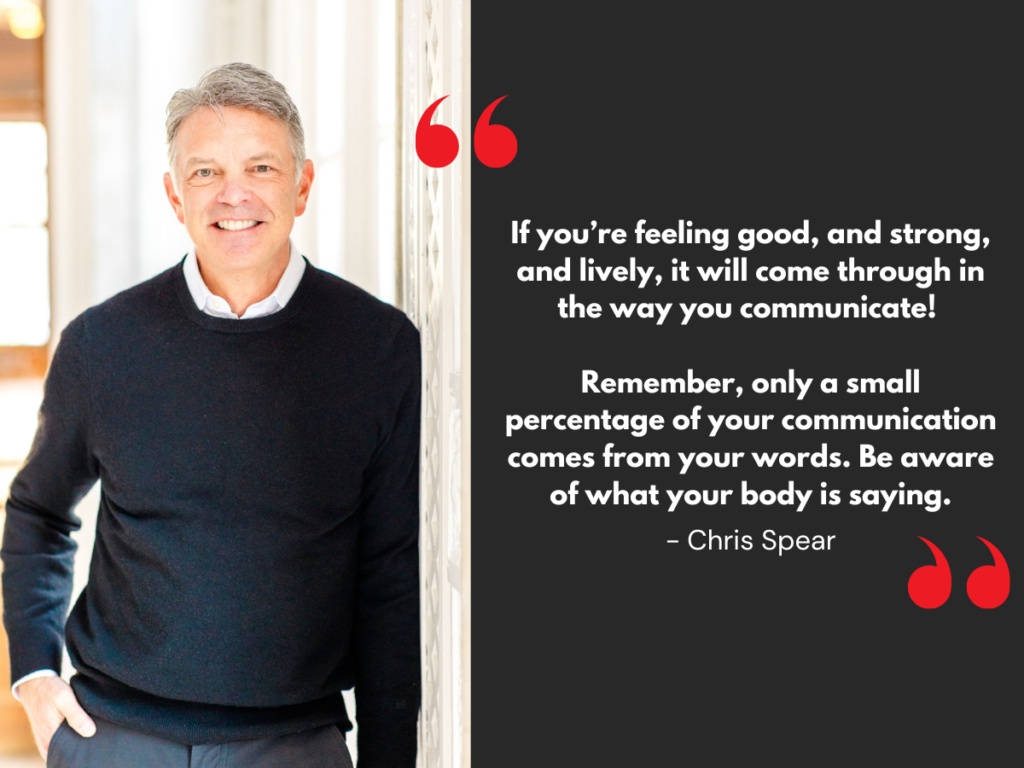
Only a small percentage of communication comes from words alone. Energy, posture, presence, and tone all shape how messages land. If the body is undertrained or depleted, leadership effectiveness suffers—no matter how good the strategy is.
The good news: you don’t need endless hours in the gym.
A powerful framework I’ve adopted is simple:
- Train with intensity
- Recover completely
- Repeat when ready
Strength, muscle health, and recovery support mitochondrial function—the engine that converts nutrition and rest into usable energy. When that system is healthy, leaders show up sharper, calmer, and more compelling.
Fitness as a Leadership Multiplier
When leaders feel strong, alert, and grounded:
- Communication improves
- Patience increases
- Decision-making sharpens
- Influence expands
This isn’t vanity. It’s stewardship of the tool you use to lead.
In Pinnacle work, we often help leaders align vision, people, and execution. But none of that functions well if the leader is running on fumes.
What’s Next?
You may have clarity around your direction, your priorities, and your leadership responsibilities.
The question is: Are you bringing the energy required to lead at the level your vision demands?
Start where you are. Make small, intentional changes. Observe the impact on your thinking, communication, and presence.
Leadership does not require perfection—but it does require capacity. When your body is trained and nourished for performance, your leadership becomes more consistent, credible, and compelling.
If you’d like support aligning personal energy, leadership capacity, and organizational execution, I’d be glad to continue the conversation.
Clarity multiplied by energy creates momentum.