
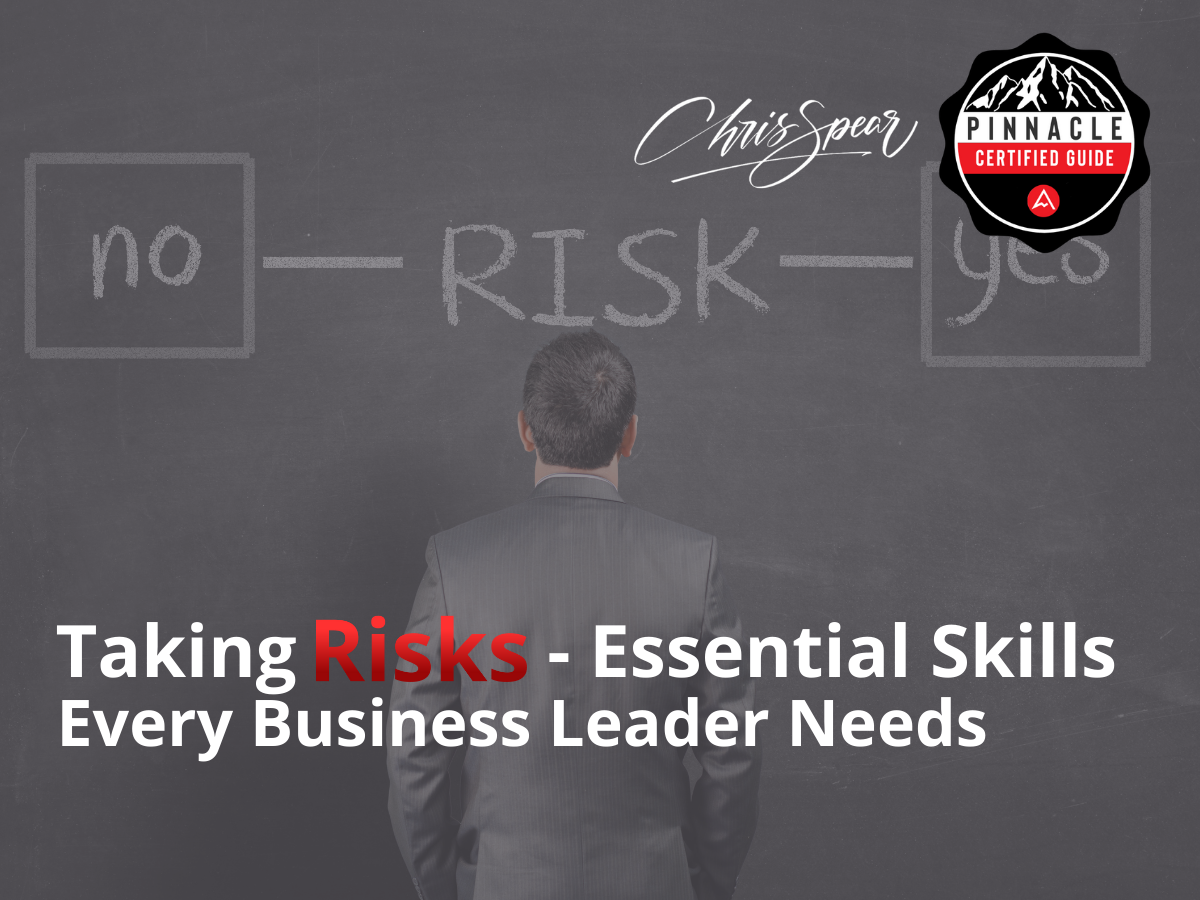
“People who don’t take risks generally make about two big mistakes a year. People who do take risks generally make about two big mistakes a year.”— Peter Drucker
That insight reframes risk in a powerful way.
Risk is not something leaders can eliminate. It is something they must understand, anticipate, and manage intentionally. The difference between strong and struggling organizations is not how much risk they face—but how well leaders predict and respond to it.
In Pinnacle, risk management is a Predict discipline, reinforced through clear direction and disciplined execution.
1. See the Risk Before It Sees You
Effective risk leadership begins with awareness.
Strong leaders intentionally scan both the internal and external environment—operations, people, finances, customers, competitors, and market conditions. This wide-angle view allows leaders to spot patterns and potential disruptions early.
In Pinnacle, leaders strengthen their predicting muscles by:
- Surfacing assumptions openly
- Identifying constraints and vulnerabilities
- Discussing risks before they become emergencies
Prediction is not about certainty. It is about seeing sooner.
2. Reduce Risk Through Clear Direction
Unclear direction amplifies risk.
When people don’t know where the organization is headed—or how decisions should be made—they hesitate, improvise, or work at cross-purposes. Clear direction reduces unnecessary risk by creating alignment and confidence.
Strong Pinnacle leaders:
- Clearly articulate purpose and direction
- Anchor decisions in shared values
- Make tradeoffs visible and intentional
Clarity does not remove risk—but it prevents confusion from making it worse.
3. Create a Culture Where Risks Are Spoken Aloud
Silence is one of the greatest risk multipliers.
Leaders must intentionally create environments where people feel safe naming concerns, surfacing uncertainties, and questioning assumptions. When risks are discussed openly, they can be addressed proactively rather than reactively.
Disciplined communication rhythms help:
- Keep leaders grounded in reality
- Surface issues early
- Prevent surprises
Transparency is not weakness. It is operational strength.
4. Act Decisively When Risk Becomes Reality
Prediction without action is wasted insight.
When risks materialize, leaders must respond with clarity and decisiveness. This requires clear Results Ownership—knowing who owns which decisions and outcomes—so action does not stall.
Strong leaders:
- Identify the real issue, not just the symptom
- Decide what matters most right now
- Assign clear next actions with ownership
Small, decisive actions taken consistently reduce long-term risk and build momentum.
5. Learn Quickly—Win or Lose
Every outcome carries data.
Whether a decision leads to success or setback, leaders must pause to extract learning. Organizations that fail to reflect repeat the same mistakes. Organizations that learn strengthen their ability to predict the future.
Pinnacle leaders build reflection into their rhythm by:
- Reviewing outcomes honestly
- Studying trends, not anecdotes
- Adjusting priorities and assumptions
Learning turns experience into wisdom.
Risk Is a Leadership Skill—Not a Gamble
Strong leaders don’t avoid risk.
They don’t rush blindly into it either.
They predict thoughtfully, decide intentionally, and execute with discipline—knowing that progress requires movement, not perfection.
Taking risks is not reckless when it is guided by clarity, communication, and learning. It is how organizations grow, adapt, and stay resilient.
That is Predict & Perform leadership.
Moving Forward with Confidence
If you want to lead through uncertainty with confidence, the goal is not to eliminate risk—but to strengthen how you see it and respond to it.
When leaders combine clear direction, open communication, disciplined execution, and continuous learning, risk becomes manageable—and opportunity becomes visible.
If you’d like support strengthening your organization’s ability to predict, decide, and perform in uncertain conditions, I’d welcome the conversation.